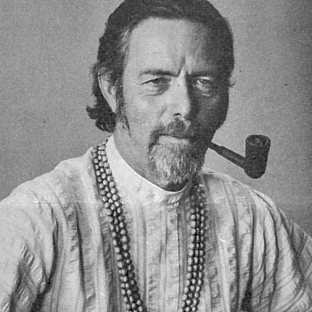
The Dance of Existence: Embracing Unity in Motion
Alan Watts invites us into a profound understanding of existence with his assertion, "To dance is to be aware that the universe dances with you." This quote encapsulates the essence of our interconnectedness with the cosmos, suggesting that our movements and experiences are not isolated but rather part of a grand, harmonious choreography. The stakes of this realization are high; it challenges us to awaken to the beauty of our existence and the relationships that bind us to the world around us.
In a world often marked by division and disconnection, Watts's words serve as a reminder of the unity that underlies all things. To dance, in this context, is not merely a physical act but a metaphor for living with awareness and intention. It invites us to recognize the rhythm of life that flows through us and to engage with it fully, fostering a sense of belonging and purpose. This awareness can transform our mundane experiences into a celebration of existence itself.
The image / the metaphor
The imagery of dance in Watts's quote evokes a sense of fluidity and grace, suggesting that life is not a rigid structure but a dynamic interplay of forces. The verb "dance" implies movement, spontaneity, and joy, while the phrase "the universe dances with you" emphasizes a reciprocal relationship between the individual and the cosmos. This dance is not one-sided; it is a partnership that requires both awareness and participation, inviting us to engage with the world around us in a meaningful way.
Diving deeper into the metaphor, we can see that dance represents the ebb and flow of life itself. Just as dancers respond to music, we too are called to respond to the rhythms of our existence. This interplay of awareness and action creates a symbiotic relationship with the universe, where our individual movements contribute to a larger cosmic dance. In this light, every thought, emotion, and action becomes a step in the dance, reminding us that we are never alone in our journey.
In the speaker's tradition
Watts's teachings resonate with the notion of "dharma," the natural order of the universe, which invites us to align our actions with the greater flow of existence. In his work, he often draws upon the wisdom of Eastern philosophies, illustrating how the dance of life is a reflection of our understanding of the universe. A relevant text that echoes this sentiment is the Tao Te Ching, which speaks of the harmony between the individual and the cosmos, urging us to embrace the natural rhythms of life as we navigate our paths.
Living the teaching
Consider a modern scenario where this teaching can be applied: a busy professional navigating the demands of work and personal life. In the hustle and bustle, it is easy to lose sight of the interconnectedness of our actions and the world around us. By embracing the idea that "the universe dances with you," one can approach daily tasks with a sense of awareness and intention, recognizing that each email sent or conversation had is part of a larger dance. This perspective can transform stress into a sense of purpose, as we begin to see our contributions as integral to the greater whole.
Another application of this teaching might arise in the context of relationships. When faced with conflict or misunderstanding, remembering that we are all part of the same cosmic dance can foster empathy and compassion. Instead of viewing the other person as an adversary, we can recognize them as a fellow dancer, each navigating their own steps. This shift in perspective encourages us to engage with love and understanding, allowing the dance of our interactions to become a source of healing and connection.
A reflection
As we contemplate Watts's profound insight, we are invited to reflect on our own experiences of unity and awareness. How can we cultivate a deeper sense of connection with the universe in our daily lives? By asking ourselves this question, we open the door to a richer understanding of our place within the cosmic dance, allowing us to move through life with grace and intention.



Join the BrightStar Community
Stay connected with daily inspiration, event announcements, and community wisdom