The Zen of Our Inner Landscape
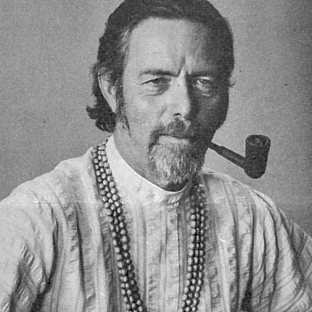
Alan Watts poignantly asserts that "the only Zen you find on the tops of mountains is the Zen you bring up there." This statement invites us to reflect on the profound truth that our inner state shapes our experiences, regardless of our external circumstances. It emphasizes that enlightenment or peace is not a destination to be reached but a quality of awareness we cultivate within ourselves. The mountains, often symbolic of lofty aspirations and spiritual quests, serve as a backdrop for this exploration of interiority.
In a world that often equates achievement with external validation, Watts’ words remind us that true fulfillment arises from within. The mountains may represent the heights of spiritual attainment, yet they cannot bestow Zen upon us if we do not carry it in our hearts. This teaching challenges us to examine our inner landscapes and recognize that the essence of our being is what ultimately colors our experiences, whether we are in serene nature or the chaos of daily life.
The image / the metaphor
The imagery of mountains evokes a sense of grandeur and aspiration, suggesting that reaching the summit is synonymous with achieving enlightenment. However, Watts cleverly subverts this notion by asserting that the Zen we seek is not found in the lofty heights but is instead a reflection of our own inner state. The verbs in his statement—"find" and "bring"—imply an active engagement with our consciousness, urging us to recognize that the journey is not about the external climb but about the internal cultivation of awareness.
Diving deeper into the metaphor, the mountain can be seen as a representation of the challenges and obstacles we face in our spiritual journeys. It symbolizes the heights of understanding we aspire to, yet it also serves as a reminder that these heights are not inherently imbued with wisdom. Instead, they become meaningful only when we bring our own insights, struggles, and growth to the experience. Thus, the mountain transforms from a mere physical entity into a canvas upon which we project our inner realities.
In the speaker's tradition
Alan Watts, a prominent figure in the popularization of Eastern philosophy in the West, draws heavily from Zen Buddhism, which emphasizes direct experience and the nature of reality. Concepts such as *sunyata* (emptiness) and *prajna* (wisdom) resonate deeply with his assertion. In Zen, the understanding that our perceptions shape our reality is fundamental; thus, the Zen we seek is inherently tied to our own consciousness and awareness. This aligns with the idea of *dharma*, where one's path is uniquely personal and cannot be dictated by external circumstances.
In his work, Watts often references the Zen practice of *zazen*, or seated meditation, which encourages practitioners to turn inward and observe their thoughts without attachment. This practice embodies the essence of his quote, as it teaches that the clarity and peace we seek are cultivated through introspection and presence, rather than through external achievements. The teachings of Zen remind us that enlightenment is not a distant goal but a state of being that we can access in any moment.
Living the teaching
Consider a modern scenario where an individual embarks on a hiking trip to a renowned mountain, seeking solace and clarity. They envision that reaching the summit will provide them with profound insights and a sense of peace. However, as they ascend, they encounter physical exhaustion and mental distractions. It is only when they pause to breathe, reflect, and embrace the present moment that they realize the tranquility they sought was not at the peak but within themselves all along. This experience illustrates how our expectations can cloud our awareness, and that true Zen is accessible in the journey itself.
A reflection
As we contemplate Watts' profound insight, we are invited to ask ourselves: What Zen do I bring to my daily experiences? This question encourages us to explore the ways in which our inner landscapes influence our perceptions and interactions. By recognizing that our state of being shapes our reality, we can begin to cultivate a deeper sense of awareness and presence, allowing us to navigate life's challenges with grace and clarity.



Join the BrightStar Community
Stay connected with daily inspiration, event announcements, and community wisdom