Emerging from the Tree of Existence
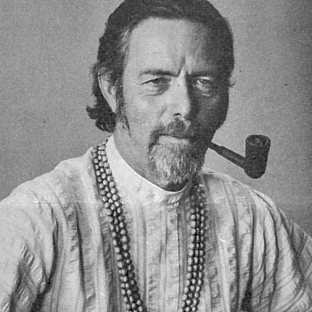
In the words of Alan Watts, "We do not 'come into' this world; we come out of it, as leaves from a tree." This profound statement invites us to reconsider our relationship with existence, suggesting that we are not isolated entities entering a foreign realm, but rather integral expressions of a greater whole. The implications of this perspective are vast, touching upon themes of unity, interconnectedness, and the natural flow of life. Understanding this notion can transform how we perceive ourselves and our place in the universe.
Watts challenges the conventional narrative of birth and existence, urging us to see ourselves as extensions of the world around us. This shift in perspective encourages a deeper appreciation for the interconnectedness of all life. Just as leaves are nourished by the tree, drawing sustenance from its roots and branches, we too are nourished by the intricate web of life that surrounds us. This realization can lead to a more harmonious existence, fostering compassion and understanding toward ourselves and others.
The image / the metaphor
The imagery of leaves emerging from a tree is rich and evocative. It conjures a sense of natural beauty and organic growth, emphasizing the idea that we are not separate from the world but rather a part of its ongoing unfolding. The verb "come out of" suggests a natural process, one that is effortless and inherent, contrasting sharply with the notion of "coming into," which implies a forceful entry into a foreign space. This subtle shift in language evokes feelings of belonging and unity with the cosmos.
Diving deeper into this metaphor, we can explore the relationship between the tree and its leaves as a representation of the interconnectedness of all beings. The tree symbolizes the universe or the source of all existence, while the leaves represent individual lives, each unique yet fundamentally linked to the whole. This perspective invites us to consider our lives as expressions of a larger reality, encouraging us to embrace our roles as participants in the grand tapestry of life rather than isolated observers.
In the speaker's tradition
Alan Watts, a prominent figure in the exploration of Eastern philosophies, particularly Zen Buddhism, offers a perspective that resonates deeply with concepts such as dharma and sunyata. Dharma, often understood as the natural law or the path of righteousness, aligns with the idea that we are expressions of a greater order. Sunyata, or emptiness, suggests that our individuality is not a fixed essence but rather a dynamic manifestation of the interconnectedness of all things. In this light, Watts's quote serves as a reminder of our inherent unity with the universe.
In his work, Watts often draws upon the teachings of Zen masters, who emphasize the importance of recognizing the illusion of separateness. For instance, in the Zen text "The Heart Sutra," the concept of emptiness is central, illustrating that all phenomena are interdependent and devoid of inherent existence. This aligns beautifully with Watts's assertion that we emerge from the world, emphasizing the fluidity of identity and the importance of understanding our place within the greater whole.
Living the teaching
Consider a modern scenario where this teaching might resonate: a bustling city street filled with diverse individuals, each absorbed in their own lives. In such a setting, it is easy to feel isolated, as if we are merely passing through a world that does not acknowledge our presence. However, if we embrace Watts's perspective, we can begin to see each person as a leaf on the same tree, each contributing to the vibrancy of the community. This recognition can foster a sense of connection, prompting us to engage with others more openly and compassionately.
In relationships, this teaching can be particularly transformative. Imagine a moment of conflict with a loved one, where feelings of frustration and separation arise. By recalling the metaphor of the tree and its leaves, we can shift our focus from the perceived differences to the shared roots of our existence. This understanding encourages empathy and patience, allowing us to navigate challenges with a sense of unity rather than division. In daily practices, such as mindfulness or meditation, we can cultivate this awareness, reminding ourselves of our interconnectedness and the beauty of emerging from the same source.
A reflection
As we contemplate Watts's profound insight, we might ask ourselves: How do I perceive my connection to the world around me? In what ways can I embrace the understanding that I am not separate from the universe, but rather an integral part of its unfolding? This question invites us to explore our relationships, our environment, and our own sense of self, encouraging a deeper engagement with the world as we recognize our shared existence.



Join the BrightStar Community
Stay connected with daily inspiration, event announcements, and community wisdom