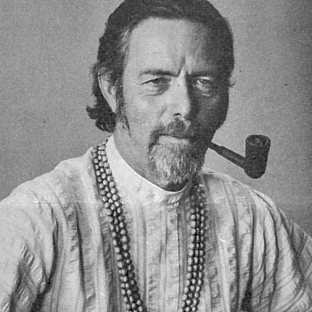
Embracing the Unchangeable: The Wisdom of Acceptance
Alan Watts's assertion that "Things are as they are because they could not be otherwise" invites us to confront the nature of reality with a profound sense of acceptance. This statement challenges our instinctual desire to resist or alter the circumstances of our lives, urging us instead to recognize the inherent necessity of each moment as it unfolds. In a world rife with uncertainty and chaos, this perspective offers a pathway to inner peace, suggesting that our suffering often stems from our refusal to accept what is. By embracing this wisdom, we can cultivate a deeper understanding of ourselves and the world around us.
Watts's words resonate deeply in a culture that often prioritizes control and manipulation over acceptance and surrender. The notion that things could not be otherwise invites us to explore the interconnectedness of all experiences, revealing that each moment is a product of countless influences and conditions. This understanding not only fosters compassion for ourselves but also for others, as we recognize that everyone is navigating their own complex web of circumstances. In this light, acceptance becomes not merely a passive resignation but an active engagement with reality, allowing us to respond to life with clarity and grace.
The image / the metaphor
The imagery within Watts's quote evokes a sense of inevitability, as if each moment is a thread woven into the fabric of existence. The phrase "could not be otherwise" suggests a deterministic view of reality, where every event and circumstance is the result of preceding causes and conditions. This perspective invites us to visualize life as a vast tapestry, where each thread represents a choice, an action, or an event that has led to the present moment. The verbs chosen—"are" and "could not be"—imply a static acceptance of reality, urging us to acknowledge the present without the burden of regret or the weight of expectation.
In the speaker's tradition
Alan Watts, a prominent interpreter of Eastern philosophy for Western audiences, draws heavily from Zen Buddhism in his teachings. Central to Zen is the concept of *sunyata*, or emptiness, which posits that all phenomena are interdependent and devoid of inherent existence. This aligns with Watts's assertion that things are as they are because they could not be otherwise; it emphasizes the idea that our perceptions and experiences are shaped by a multitude of factors beyond our control. In this context, acceptance becomes a form of wisdom, allowing us to see the world as it truly is, free from the distortions of our desires and aversions.
Moreover, Watts's philosophy resonates with the notion of *dharma*, the natural order of the universe. By recognizing that everything unfolds according to its own intrinsic nature, we can cultivate a sense of harmony with the world around us. This perspective is echoed in various Zen texts, such as the *Heart Sutra*, which teaches that form is emptiness and emptiness is form, reinforcing the idea that our understanding of reality is shaped by our perceptions. In embracing this wisdom, we can learn to navigate the complexities of life with a sense of ease and acceptance.
Living the teaching
Consider a modern scenario where this teaching might resonate: a person facing an unexpected job loss. Initially, the individual may feel anger, confusion, or despair, struggling against the reality of their situation. However, by reflecting on Watts's insight that "things are as they are because they could not be otherwise," they might begin to shift their perspective. Instead of resisting the change, they can embrace it as an opportunity for growth and self-discovery, allowing themselves to explore new paths and possibilities that may not have been apparent before.
In a different context, imagine a relationship undergoing strain due to misunderstandings and unmet expectations. By applying the principle of acceptance, one partner might recognize that their feelings and reactions are shaped by a myriad of factors, including past experiences and personal insecurities. This understanding can foster compassion and patience, allowing both individuals to engage in open dialogue without the pressure to change one another. In this way, acceptance becomes a transformative practice, enabling deeper connections and a more profound appreciation for the complexities of human relationships.
A reflection
As we contemplate Watts's profound statement, we are invited to ask ourselves: In what areas of my life am I resisting acceptance? This question encourages us to reflect on the moments where we cling to expectations or judgments, preventing us from experiencing life as it is. By exploring this inquiry, we can begin to cultivate a deeper sense of peace and understanding, allowing us to navigate the world with grace and acceptance.



Join the BrightStar Community
Stay connected with daily inspiration, event announcements, and community wisdom